


 Back
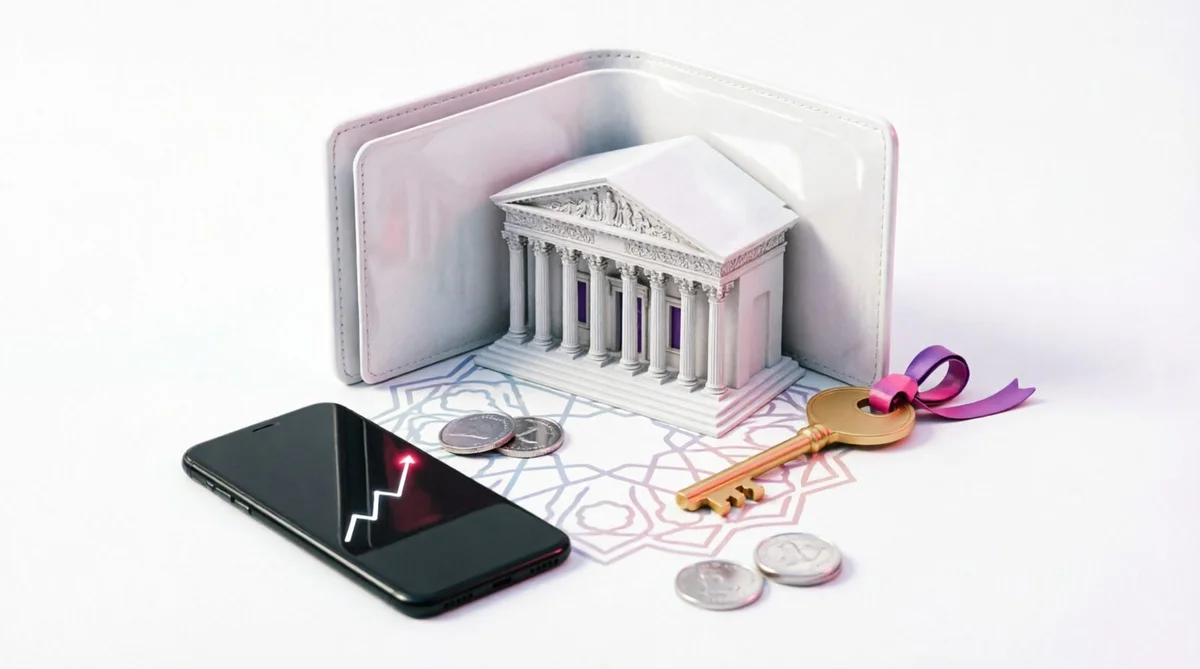
What is a brokerage account in simple terms
How does it differ from a deposit, what is stored on it, and how to open it online
To buy a stock or bond, a regular bank account is not enough. You need a brokerage account — it is through this account that a private investor accesses the stock market. Let's figure out what it is, how it differs from a deposit, and how to open one.
What is a brokerage account
A brokerage account is an account through which you buy and sell securities: stocks, bonds, ETFs. The trades themselves take place on the exchange, and the broker acts as an intermediary with access to these trades. You give the command in the app to "buy" — the broker executes it on the exchange, and the securities are recorded in your account.
How it differs from a bank deposit
A deposit is money you give to the bank at a predetermined interest rate. A brokerage account is organized differently: it holds not interest, but your assets, and their value changes with the market. There is no fixed income here, but there is the opportunity to earn from the increase in the price of securities and dividends. The risk is also different: the price of a stock can both rise and fall.
What can be held in a brokerage account
- stocks of companies — a share in the business;
- bonds — with more predictable income;
- ETFs — ready-made sets of securities in one instrument;
- IPO participation — purchase of company shares at the stage of going public.
How much does it cost
Opening and maintaining an account with a broker is usually free, and the broker earns from a small commission on transactions. Exact tariffs should always be checked in advance — they are openly indicated by the broker.
How to open a brokerage account
Today it is done online, without visiting an office. You can open a brokerage account and make your first transaction in the 'Stock Broker' app — a broker with licenses from the Ministry of Finance of Tajikistan and access to the US market: NYSE and NASDAQ stocks, ETFs, bonds, and IPOs. If compliance with Islamic norms is important to you, there is a separate halal brokerage account. You can start with a small amount and companies you understand.
This material is for informational purposes only and is not an individual investment recommendation. Investment returns are not guaranteed, past performance does not determine future results.

Calls within Tajikistan are free
Investments
Information




The information provided is for informational purposes only and should not be considered as an offer to buy or sell foreign currency, securities and/or other financial instruments. The information presented on this website is not an individual investment recommendation. Financial instruments or transactions mentioned in this section may not be suitable for you, may not correspond to your investment profile, financial situation, investment experience, knowledge, investment objectives, attitude to risk and profitability.
LLC "Exchange Broker" does not guarantee and does not promise future profitability of investments, does not guarantee the reliability of possible investments and the stability of possible income. Investment results in the past do not guarantee income in the future.
LLC "Exchange Broker" is not responsible for possible investor losses in the event of transactions and investments in financial instruments, and also does not guarantee the return, effectiveness and profitability of investments.
LLC "Exchange Broker" hereby informs that it operates in the securities market in accordance with the following professional participant licenses issued by the Ministry of Finance of the Republic of Tajikistan: depository activity No.010/25 dated 25.06.2025; brokerage activity No.007/25 dated 25.06.2025; dealer activity No.008/25 dated 25.06.2025 and securities management activity No.009/25 dated 25.06.2025, and also informs about the risk of a conflict of interest, including as a result of combining various types of professional activity in the securities market.