


 Back
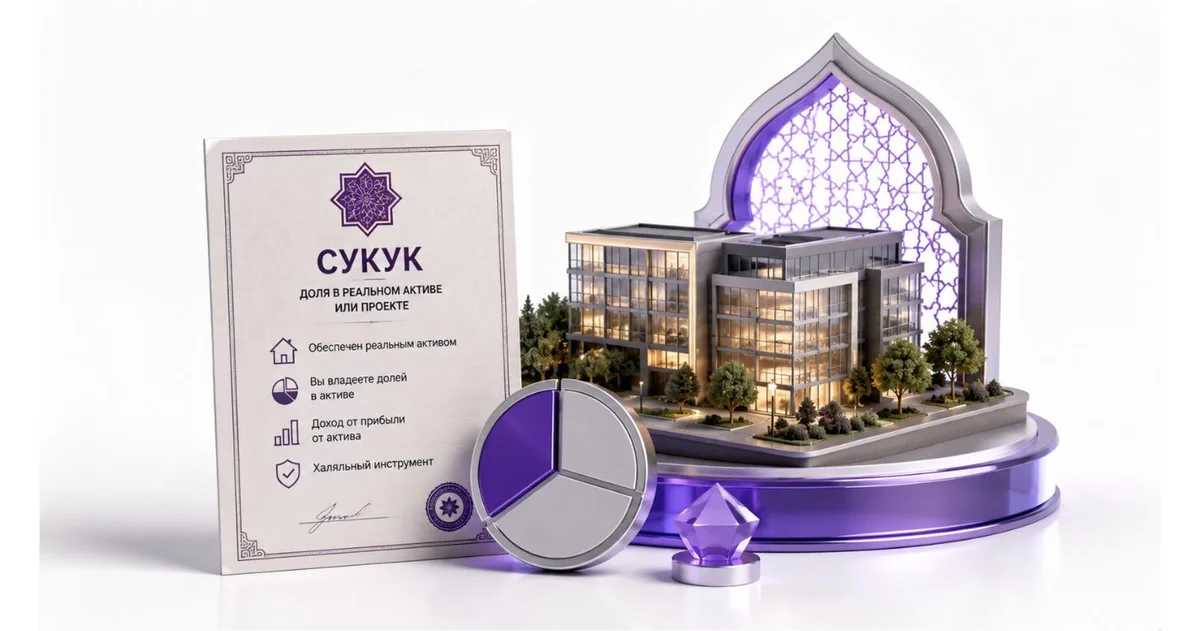
What is sukuk in simple terms
Sukuk are often referred to as an "Islamic bond," but this is not entirely accurate: unlike a conventional bond, sukuk does not represent debt with interest; instead, it gives the holder a share in a real asset or project.
How sukuk differs from a regular bond
The holder of a classic bond is a creditor: they lend money to the issuer and receive a fixed interest (coupon), regardless of the performance of the asset for which the bond was issued. The holder of sukuk, on the other hand, receives a share of joint ownership in a specific asset — for example, real estate, equipment, or infrastructure project — and their income is formed from the profit or rental income of this asset, not from interest on the loan. This is fundamentally important in terms of the prohibition of riba (interest lending) in Islamic finance.
How it works in practice
The most common structure is lease-based (ijara sukuk): a special purpose vehicle purchases the asset, rents it out, and rental payments are distributed among the sukuk holders in proportion to their share. At the end of the term, the asset may be sold or repurchased by the issuer, and holders receive the nominal value of their share. There are other structures as well, based on partnership (mudarabah, musharakah), where income depends on the profit of the joint project.
Risks: no less real than those of bonds
Sukuk is not a risk-free instrument: the income depends on the performance of the underlying asset or project, and the value of the sukuk itself on the secondary market may fluctuate. Compliance of a specific issuance with Shariah norms is confirmed by the Shariah supervisory board of the issuer — this should be checked separately for each issuance, rather than assuming the name "sukuk" guarantees halal status.
This material is for informational purposes only and is not a religious ruling (fatwa) or an individual investment recommendation.

Calls within Tajikistan are free
Investments
Information




The information provided is for informational purposes only and should not be considered as an offer to buy or sell foreign currency, securities and/or other financial instruments. The information presented on this website is not an individual investment recommendation. Financial instruments or transactions mentioned in this section may not be suitable for you, may not correspond to your investment profile, financial situation, investment experience, knowledge, investment objectives, attitude to risk and profitability.
LLC "Exchange Broker" does not guarantee and does not promise future profitability of investments, does not guarantee the reliability of possible investments and the stability of possible income. Investment results in the past do not guarantee income in the future.
LLC "Exchange Broker" is not responsible for possible investor losses in the event of transactions and investments in financial instruments, and also does not guarantee the return, effectiveness and profitability of investments.
LLC "Exchange Broker" hereby informs that it operates in the securities market in accordance with the following professional participant licenses issued by the Ministry of Finance of the Republic of Tajikistan: depository activity No.010/25 dated 25.06.2025; brokerage activity No.007/25 dated 25.06.2025; dealer activity No.008/25 dated 25.06.2025 and securities management activity No.009/25 dated 25.06.2025, and also informs about the risk of a conflict of interest, including as a result of combining various types of professional activity in the securities market.