


 Back
Investment Automation: Set and Forget
Introduction
In today's world, where time is one of the most valuable resources, the concept of "set and forget" is becoming increasingly appealing, especially in the field of personal finance and investments. Investment automation offers investors the opportunity to systematically grow their capital, minimizing emotional impact and time expenditure. This article is dedicated to exploring tools and strategies that allow automating the investment process, making it accessible and effective even for beginners.
What is Investment Automation?
Investment automation — is the process of using technology to execute investment operations without direct involvement from the investor. The main idea is to create pre-defined rules and strategies, which are then automatically applied to the investment portfolio. This can include regular account contributions, portfolio rebalancing, investing in specific assets, and more.
The goal of automation is to eliminate human factors such as emotional decisions, forgetfulness, and lack of time, which often hinder achieving long-term financial goals. The "set and forget" principle means that after initially setting up the system, the investor can focus on other areas of their life, knowing their investments are working for them in the background.
Key Tools for Investment Automation
There are several key tools and strategies that enable automating the investment process:
1. Robo-Advisors
Robo-advisors are automated platforms that use algorithms to create and manage investment portfolios. They ask the user a series of questions about their financial goals, risk tolerance, and time horizon, then offer an appropriate portfolio consisting of ETFs and mutual funds. Robo-advisors can also automatically rebalance the portfolio to maintain it in accordance with the initial strategy.
Advantages:
• Lower fees compared to traditional financial advisors.
• Accessibility for investors with small capital.
• Automatic diversification and portfolio rebalancing.
• Removal of the emotional factor from decision-making processes.
Examples: Betterment, Wealthfront (in the US), as well as similar services offered by major brokers.
2. Dollar-Cost Averaging (DCA)
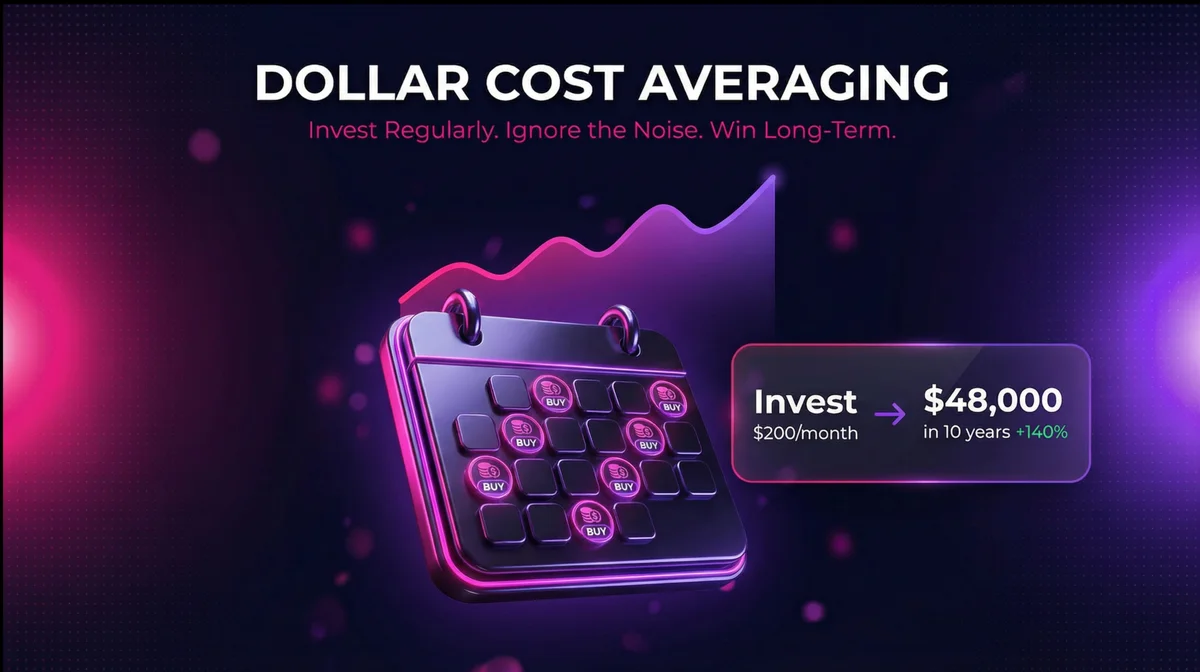
Similar to cryptocurrencies, DCA is one of the simplest and most effective automation strategies. It involves regularly investing a fixed amount of money at equal intervals (e.g., weekly or monthly) regardless of market conditions. This allows averaging the asset purchase price and reducing the risk of investing the entire sum at a market peak.
Advantages:
• Reduces the impact of market volatility.
• Builds investing discipline.
• Simplifies implementation through automatic transfers and purchases.
3. Automatic Investment Plans (Auto-Invest Plans)
Many brokerage platforms and investment apps offer automatic investment features that allow setting up regular purchases of specific assets (stocks, ETFs, mutual funds). Users can specify the amount, frequency, and assets to purchase, and the system will automatically execute these operations.
Advantages:
• Flexibility in choosing assets and amounts.
• Convenience and time-saving.
• Helps adhere to a long-term strategy.
4. Automatic Portfolio Rebalancing
Over time, the asset allocation in a portfolio might deviate from the target due to market price changes. Automatic rebalancing is the process of selling assets whose share has increased and buying assets whose share has decreased, to return the portfolio to its original allocation. Many robo-advisors and some brokerage platforms offer this function automatically.
Advantages:
• Maintaining the desired risk level.
• Realizing profits and purchasing assets at lower prices.
• Does not require manual intervention.
Benefits and Drawbacks of Automation
Investment automation offers several significant advantages but also has some limitations that are important to consider.
Advantages:
• Discipline and Consistency: Automated investing helps adhere to long-term strategies, avoiding emotional decisions caused by short-term market fluctuations. This is especially important during volatile periods when many investors tend to sell assets in panic.
• Time-saving: Once initially set up, the system works independently, liberating the investor from the need to constantly monitor the market and make manual trades.
• Reducing Emotional Impact: Automation eliminates the influence of fear and greed, which often lead to suboptimal investment decisions.
• Accessibility: Many automation tools are available to investors of any capital level, making investing more democratic.
• Dollar-Cost Averaging (DCA): Automatic regular investments naturally implement the DCA strategy, helping to reduce the average purchase price of assets and minimize the risk of buying at a market peak.
• Automatic Diversification and Rebalancing: Robo-advisors and some platforms automatically maintain a diversified portfolio and adjust its composition to maintain the desired risk level.
Drawbacks:
• Limited Control: Investors have less direct control over specific investment decisions, especially when using robo-advisors.
• Fees: Although fees for robo-advisors are usually lower than traditional advisors, they still exist and can impact overall returns.
• Lack of Personalized Approach: Standard algorithms may not account for unique, complex financial situations or specific investment goals that require a more personalized approach.
• Risk of Over-Reliance on "Set and Forget": Over-reliance on automation without periodic review and strategy adjustment may lead to missing important market changes or suboptimal results.
• Technical Failures: Like any technology, automated systems can experience technical failures or errors, although this is rare on reliable platforms.
Conclusion
Investment automation is a powerful tool for achieving long-term financial goals. It allows investors to take advantage of a disciplined, consistent approach to building capital while minimizing time expenditures and the impact of emotional decisions. Robo-advisors, dollar-cost averaging, automatic investment plans, and portfolio rebalancing are key components of this strategy.
While automation offers many benefits, it is essential to remember the necessity of periodic review and strategy adjustment, as well as recognizing its limitations. For beginners, automation can be an excellent starting point, allowing them to start investing with minimal effort and gradually increase their experience and knowledge in the financial world. Ultimately, successful investing is not only about choosing the right tools but also forming healthy financial habits, in which automation can provide invaluable assistance.

Calls within Tajikistan are free
Investments
Information




The information provided is for informational purposes only and should not be considered as an offer to buy or sell foreign currency, securities and/or other financial instruments. The information presented on this website is not an individual investment recommendation. Financial instruments or transactions mentioned in this section may not be suitable for you, may not correspond to your investment profile, financial situation, investment experience, knowledge, investment objectives, attitude to risk and profitability.
LLC "Exchange Broker" does not guarantee and does not promise future profitability of investments, does not guarantee the reliability of possible investments and the stability of possible income. Investment results in the past do not guarantee income in the future.
LLC "Exchange Broker" is not responsible for possible investor losses in the event of transactions and investments in financial instruments, and also does not guarantee the return, effectiveness and profitability of investments.
LLC "Exchange Broker" hereby informs that it operates in the securities market in accordance with the following professional participant licenses issued by the Ministry of Finance of the Republic of Tajikistan: depository activity No.010/25 dated 25.06.2025; brokerage activity No.007/25 dated 25.06.2025; dealer activity No.008/25 dated 25.06.2025 and securities management activity No.009/25 dated 25.06.2025, and also informs about the risk of a conflict of interest, including as a result of combining various types of professional activity in the securities market.