

 Back
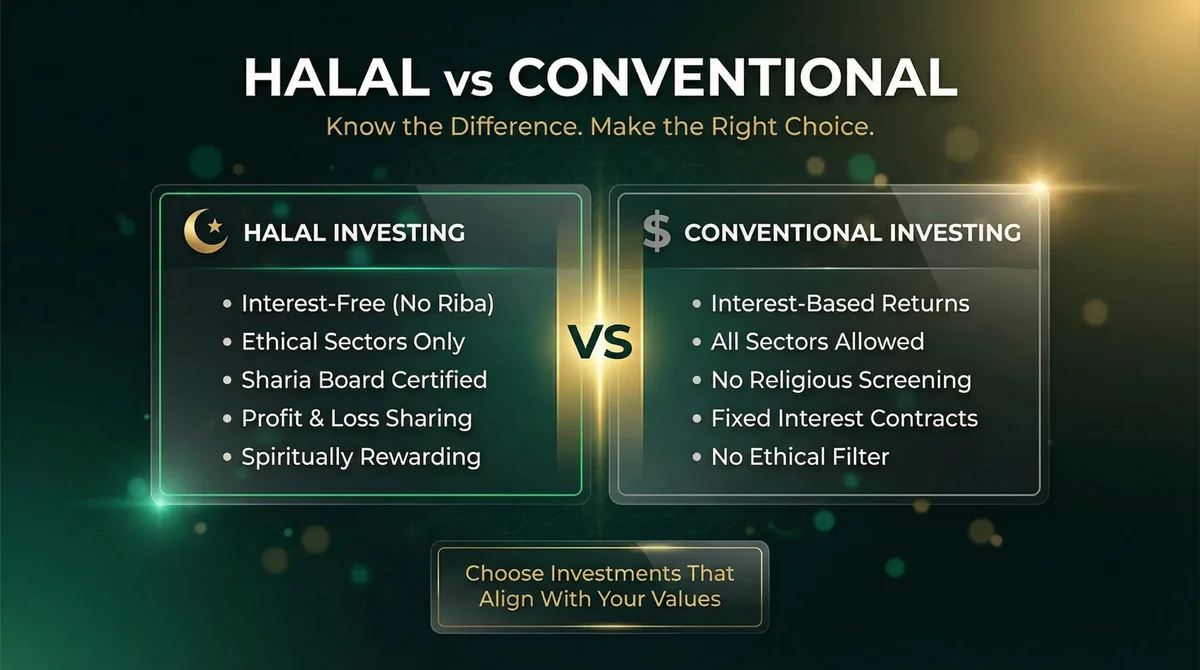
Halal Investment Portfolio: Cases of Successful Strategies
How to Build a Balanced and Ethical Portfolio?
Building an investment portfolio is the art of balancing risk and return. For a Muslim investor, an additional critically important variable is added to this equation: compliance with Shariah norms.
In this article, we will delve into the principles of diversifying halal assets and review three classic case strategies that will help clients of LLC “Stock Broker” achieve their financial goals.
Golden Rule: Halal Diversification
Diversification is the distribution of funds among different types of assets to reduce risk. In halal investing, we cannot use traditional bonds or bank deposits, but we have a wide range of alternatives:
1. Equities: Shares in businesses of companies that have passed the Shariah filter.
2. Sukuk: Islamic certificates provide stable income from real assets.
3. Real Estate: Direct ownership or through halal funds (REITs).
4. Commodities: Physical gold or exchange-traded instruments backed by metals.
5. Cash: Funds in non-interest-bearing accounts or money market instruments (Murabaha).
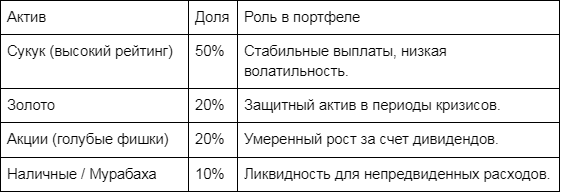
Case 1: Conservative Strategy (Capital Preservation)
Goal: Preservation of funds and protection against inflation with minimal risk.
For whom: Older investors or those who may need the money in the next 1-2 years.
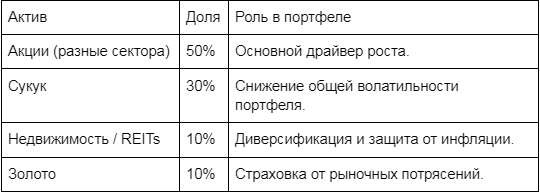
Case 2: Moderate Strategy (Balanced Growth)
Goal: Optimal combination of capital growth and regular income.
For whom: Most investors with a medium planning horizon (3-7 years).
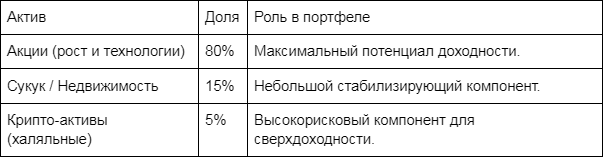
Case 3: Aggressive Strategy (Maximum Growth)
Goal: Significant capital multiplication in the long-term.
For whom: Young investors with a 10+ years horizon, ready for temporary drawdowns.
Practical Tips for Building a Portfolio
1. Rebalancing: Every six months or a year, check the asset shares. If stocks have risen significantly and now occupy 70% instead of 50%, sell part and buy more Sukuk to return to your strategy.
2. Purification: Remember to annually purify the portfolio of accidental forbidden income (as we described in the first article).
3. Planning Horizon: The longer you do not plan to touch the money, the larger the share of stocks you can afford.

Calls within Tajikistan are free
Investments
Information




The information provided is for informational purposes only and should not be considered as an offer to buy or sell foreign currency, securities and/or other financial instruments. The information presented on this website is not an individual investment recommendation. Financial instruments or transactions mentioned in this section may not be suitable for you, may not correspond to your investment profile, financial situation, investment experience, knowledge, investment objectives, attitude to risk and profitability.
LLC "Exchange Broker" does not guarantee and does not promise future profitability of investments, does not guarantee the reliability of possible investments and the stability of possible income. Investment results in the past do not guarantee income in the future.
LLC "Exchange Broker" is not responsible for possible investor losses in the event of transactions and investments in financial instruments, and also does not guarantee the return, effectiveness and profitability of investments.
LLC "Exchange Broker" hereby informs that it operates in the securities market in accordance with the following professional participant licenses issued by the Ministry of Finance of the Republic of Tajikistan: depository activity No.010/25 dated 25.06.2025; brokerage activity No.007/25 dated 25.06.2025; dealer activity No.008/25 dated 25.06.2025 and securities management activity No.009/25 dated 25.06.2025, and also informs about the risk of a conflict of interest, including as a result of combining various types of professional activity in the securities market.