

 Back
Back
About
Cortigent is developing electrical neurostimulation systems designed to provide artificial vision through perceptions of light and shapes. The company’s first commercial system, Argus II, received approval from the U.S. Food and Drug Administration (FDA) in March 2013 under a Humanitarian Device Exemption. Cortigent has completed an early feasibility trial of Orion, a more advanced system for artificial vision. Incorporated in Delaware, Cortigent builds on the foundation established by its predecessor, Second Sight Medical Products, Inc., and continues to lead in developing targeted neurostimulation systems that assist patients in regaining critical body functions.
The company’s technology combines advanced neuroscience with proprietary microelectronics, software, and data processing capabilities. The Argus II system has provided artificial vision to hundreds of profoundly blind individuals who were implanted with the device. Building on this neurostimulation platform, Cortigent has substantially completed an early feasibility clinical trial for the Orion system, which represents a more advanced solution for artificial vision. The company is also exploring applications of its Orion neurostimulation technology to accelerate the recovery of arm and hand function in patients partially paralyzed due to stroke. In February 2023, Cortigent initiated discussions with the FDA regarding an early feasibility clinical study focused on stroke victims. The company believes its platform technology has significant potential for future applications that could drive substantial business growth over time.
Both the Argus II and Orion devices provide artificial vision through electrical stimulation. While this does not restore normal stereoscopic or color vision, it allows users to perceive light and shapes. Implanted individuals undergo specialized training to interpret their environment using this technology. Artificial vision enables users to perform basic tasks such as locating doorways, detecting the presence of other people, following crosswalks, or finding objects. The Argus II delivers stimulation to the retina's surviving cells, which transmit activity to the brain via the optic nerve. Conversely, the Orion system directly stimulates the visual cortex, the brain region responsible for vision.
The devices operate through a video camera mounted on glasses worn by the user. This camera captures visual input and relays it to a video processing unit (VPU), a battery-powered device typically worn on a belt or strap. The VPU sends power and stimulation commands to the implant while receiving diagnostic feedback through the glasses’ external antenna.
Surgical implantation varies between the two systems. Argus II requires placing an electrode array inside the eye on the retina’s surface, with a small electronics case and antenna attached to the outer surface of the eye. A cable traverses the eye wall to connect the electronics case to the array. In the Orion system, cranial surgery is performed to place an electrode array on the brain’s visual cortex. The device’s electronics case and antenna are implanted under the scalp, with a cable passing through the skull to connect the array to the electronics case. Importantly, no part of the device penetrates or cuts into brain tissue.
The quality of artificial vision provided by Argus II and Orion varies between patients. Typically, users perceive a collection of up to 60 small points of light corresponding to the brightness of different regions in the camera’s visual field. Through scanning and repetition, patients can construct a better understanding of their surroundings using these perceptions.
Headquarters
27200 Tourney Road, Suite 315 Valencia, California 91355
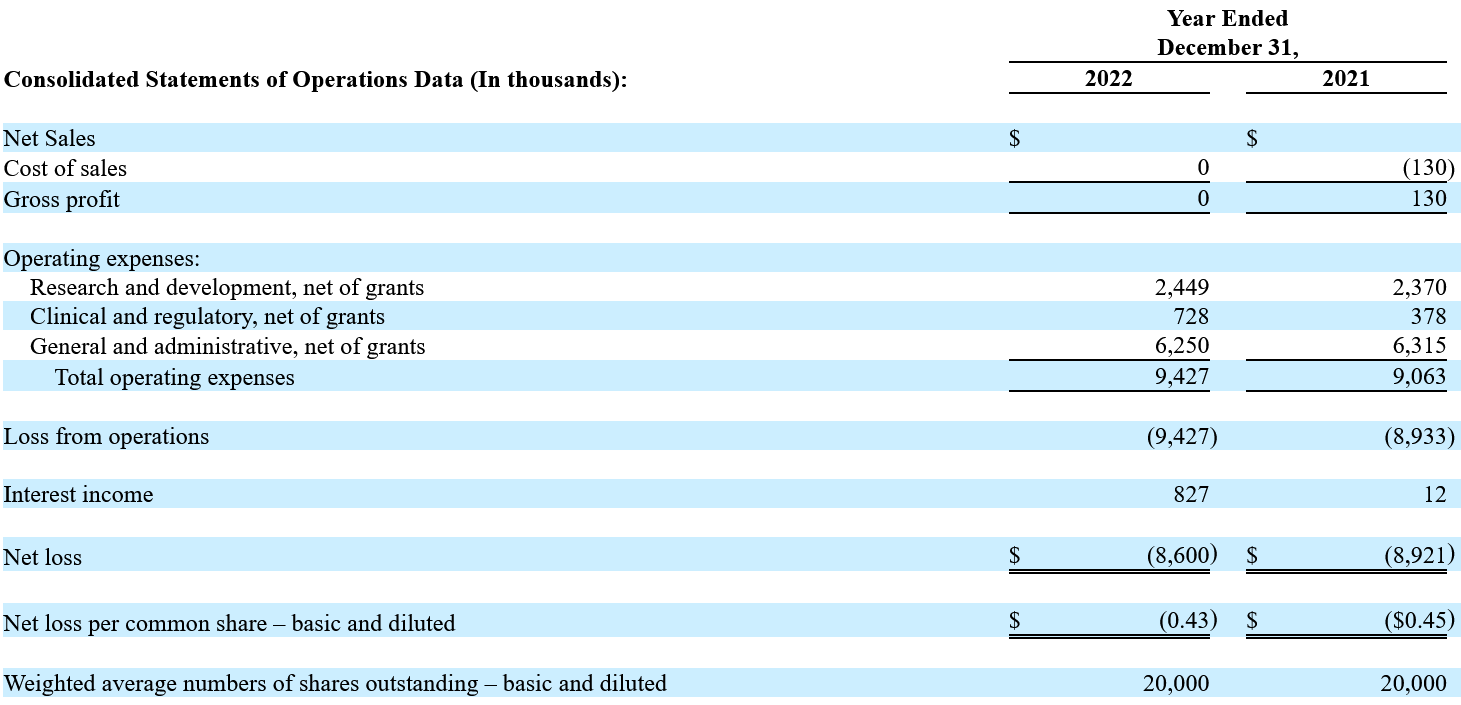
Financial information
Underwriters
ThinkEquity

Calls within Tajikistan are free
Investments
Information




The information provided is for informational purposes only and should not be considered as an offer to buy or sell foreign currency, securities and/or other financial instruments. The information presented on this website is not an individual investment recommendation. Financial instruments or transactions mentioned in this section may not be suitable for you, may not correspond to your investment profile, financial situation, investment experience, knowledge, investment objectives, attitude to risk and profitability.
LLC "Exchange Broker" does not guarantee and does not promise future profitability of investments, does not guarantee the reliability of possible investments and the stability of possible income. Investment results in the past do not guarantee income in the future.
LLC "Exchange Broker" is not responsible for possible investor losses in the event of transactions and investments in financial instruments, and also does not guarantee the return, effectiveness and profitability of investments.
LLC "Exchange Broker" hereby informs that it operates in the securities market in accordance with the following professional participant licenses issued by the Ministry of Finance of the Republic of Tajikistan: depository activity No.010/25 dated 25.06.2025; brokerage activity No.007/25 dated 25.06.2025; dealer activity No.008/25 dated 25.06.2025 and securities management activity No.009/25 dated 25.06.2025, and also informs about the risk of a conflict of interest, including as a result of combining various types of professional activity in the securities market.