

 Бозгашт
Islamic Bonds (Sukuk): A New Opportunity for Investors
What are Sukuk and how do they work?
For many investors seeking to adhere to Sharia principles, traditional bonds remain unavailable due to interest payments (riba). However, the financial world has offered an alternative — Sukuk. This is an Islamic financial certificate, often referred to as an "Islamic bond," although it fundamentally differs from conventional debt instruments.
In this article, we will examine how Sukuk are structured, why they are considered halal, and what opportunities they open up for clients of the Exchange Broker.
What is Sukuk?
Sukuk (Arabic: صكوك — legal document, cheque) is a security that confirms the owner's ownership in a real asset, project, or investment activity.
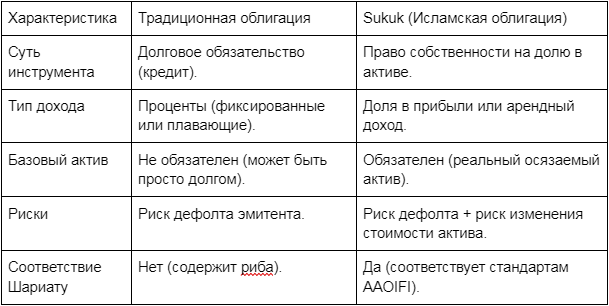
Unlike a traditional bond, which is a debt note (a promise to repay the debt with interest), Sukuk entitles its holder to a share of the profits generated by the underlying asset.
How Sukuk work: Mechanism and structure
The process of issuing Sukuk typically involves creating a special company (SPV — Special Purpose Vehicle), which acts as an intermediary between the issuer and the investors.
1. Asset allocation: The issuer (a state or company) transfers a specific asset (e.g., a building, land, or equipment) in favor of the SPV.
2. Issuance of certificates: The SPV issues Sukuk certificates and sells them to investors.
3. Investment: The funds received are transferred to the issuer for project implementation.
4. Income generation: The underlying asset starts generating income (e.g., rent or business profits). This income is distributed among the Sukuk holders.
5. Asset repurchase: At the end of the term, the issuer repurchases the asset back at face value, and investors receive their invested funds.
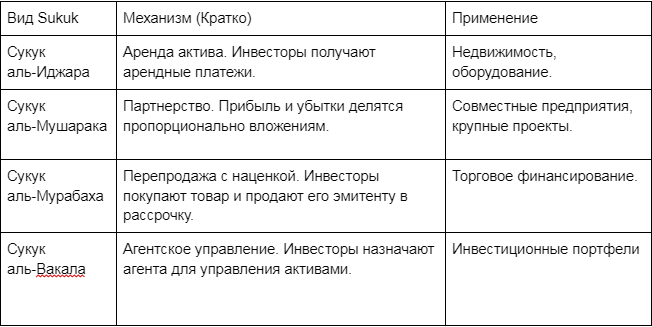
Main types of Sukuk
There are several structures of Sukuk, depending on the type of contract:
Sukuk vs Traditional bonds: Main differences
Benefits of investing in Sukuk
1. Sharia compliance (Halal): The main advantage of Sukuk is their full compliance with Islamic law principles. This allows Muslim investors to earn income without violating religious prescriptions, avoiding interest (riba), speculation (maisir), and excessive uncertainty (gharar).
2. Backed by real assets: Unlike traditional bonds, Sukuk are always tied to real, tangible assets or projects. This provides an additional level of security for investors, as they are co-owners of these assets rather than simple creditors.
3. Portfolio diversification: Sukuk provide an opportunity to diversify an investment portfolio by adding fixed or variable income instruments that differ from stocks and traditional bonds. This can reduce the overall risk of the portfolio.
4. Social and ethical responsibility: Many Sukuk issues are aimed at financing socially significant projects, such as infrastructure development, healthcare, and education. By investing in Sukuk, investors contribute to sustainable development and earn income from projects that benefit society.
5. Stable income: Depending on the structure of the Sukuk (e.g., Ijara), investors can receive regular payments (similar to rental income), providing a stable cash flow.
Risks of investing in Sukuk
Like any financial instruments, Sukuk carry certain risks that investors need to be aware of:
1. Market risk: The value of Sukuk may fluctuate depending on changes in market conditions, interest rates (although Sukuk do not pay interest, their yields can be comparable to market rates for similar assets), and the overall economic climate.
2. Credit risk (default risk): Although Sukuk are backed by assets, there is a risk that the issuer will not be able to meet its obligations to pay income or redeem the asset. The reliability of the issuer plays a key role.
3. Liquidity risk: The Sukuk market, especially in some regions, may be less liquid compared to the traditional bond market. This means selling Sukuk before maturity can be more difficult or at less favorable prices.
4. Sharia risk: There is a possibility that a Sharia board or experts might revise their opinion on the compliance of a particular Sukuk issue with Sharia norms, which could affect its attractiveness and value.
5. Operational risk: The complexity of the structure of some Sukuk may lead to operational risks associated with managing the underlying assets or income distribution.

Барои Зангҳо Ба Тоҷикистон
Дар бораи ширкат:
Иттилоот




Маълумоти пешниҳодшуда танҳо хусусияти иттилоотӣ дорад ва набояд ҳамчун пешниҳоди харид ё фурӯши асъори хориҷӣ, коғазҳои қиматнок ва/ё дигар асбобҳои молиявӣ баррасӣ шавад. Маълумоти дар ин сайт овардашуда дастури инфиродии сармоягузорӣ нест. Асбобҳои молиявӣ ё амалиётҳое, ки дар ин бахш зикр шудаанд, шояд барои шумо мувофиқ набошанд, ба профили сармоягузории шумо, вазъи молиявӣ, таҷрибаи сармоягузорӣ, дониши шумо, ҳадафҳои сармоягузорӣ, муносибат ба хатари эҳтимолӣ ва даромаднокӣ мувофиқ набошанд.
ҶДММ "Брокери Биржавӣ" даромаднокии ояндаро кафолат намедиҳад ва ваъда намедиҳад, эътимоднокии сармоягузориҳои эҳтимолӣ ва устувории ҳаҷми даромади эҳтимолиро кафолат намедиҳад. Натиҷаҳои сармоягузорӣ дар гузашта даромади ояндаро кафолат намедиҳад.
ҶДММ "Брокери Биржавӣ" барои зарарҳои эҳтимолии сармоягузор дар ҳолати анҷом додани амалиёт ва сармоягузорӣ ба асбобҳои молиявӣ ҷавобгар нест ва инчунин кафолати бозгашт, самаранокӣ ва даромаднокии сармоягузориҳоро намедиҳад.
ҶДММ "Брокери Биржавӣ" иттилоъ медиҳад, ки фаъолияти худро дар бозори коғазҳои қимматнок мувофиқи иҷозатномаҳои зерин, ки аз ҷониби Вазорати молияи Ҷумҳурии Тоҷикистон дода шудаанд, анҷом медиҳад: иҷозатномаи фаъолияти депозитарӣ №010/25 аз 25.06.2025; иҷозатномаи фаъолияти брокерӣ №007/25 аз 25.06.2025; иҷозатномаи фаъолияти дилерӣ №008/25 аз 25.06.2025 ва иҷозатномаи фаъолияти идоракунии коғазҳои қиматнок №009/25 аз 25.06.2025, инчунин оид ба хатари ба вуҷуд омадани ихтилофи манфиатҳо, аз ҷумла дар натиҷаи муттаҳид кардани намудҳои гуногуни фаъолияти касбӣ дар бозори коғазҳои қиматнок ҳушдор медиҳад.