

 Бозгашт
Дневная торговля vs долгосрочное инвестирование
Введение
Когда речь заходит об инвестировании, новичок часто сталкивается с двумя основными подходами: дневной торговлей и долгосрочным инвестированием. Оба метода имеют свои плюсы и минусы. Одни предпочитают быстрые сделки и моментальную реакцию на рынок, другие — спокойствие и стратегическое планирование. Но что же выбрать в 2025 году? И может ли один из подходов быть универсальным решением?
Что такое дневная торговля?
Дневная торговля — это стиль торговли, при котором все позиции открываются и закрываются в течение одного дня. Цель — зарабатывать на краткосрочных колебаниях цен. Чаще всего трейдеры работают на форекс, с акциями, индексами или криптовалютами.
Преимущества дневной торговли
• Быстрый результат: доход (или убыток) виден уже в течение дня.
• Гибкость: можно адаптироваться под текущую волатильность и новости.
• Возможность работать на любых рынках: форекс, акции, индексы, криптовалюты.
Недостатки дневной торговли
• Требует времени и концентрации: нужно постоянно следить за рынком.
• Повышенные риски: быстрые движения цен могут привести к значительным убыткам.
• Эмоциональная нагрузка: стресс от быстрых решений и потенциальных потерь.
• Высокие комиссии и затраты: частые торговые операции увеличивают издержки.
• Требует профессиональных навыков: нужно уметь анализировать рынок и принимать быстрые решения.
Что такое долгосрочное инвестирование?
Долгосрочное инвестирование подразумевает удержание активов более одного года. Долгосрочный инвестор стремится купить акции или другие активы и удерживать их для увеличения своего богатства.
Преимущества долгосрочного инвестирования
• Низкие транзакционные издержки: меньше торговых операций означает меньше комиссий.
• Низкий уровень риска: полагается на фундаментальный анализ и долгосрочные тренды.
• Возможность получения более высоких долгосрочных доходов: использование сложного процента.
• Исключение эмоций из уравнения: нет необходимости в частых решениях.
• Выгоды налогов: более низкие налоги на долгосрочные капитальные доходы.
Недостатки долгосрочного инвестирования
• Ограниченная способность использовать рыночную волатильность: можно упустить краткосрочные возможности.
• Невозможность вывода средств в короткий срок: капитал заблокирован в позициях.
• Требует терпения и дисциплины: нужно выдержать долгое ожидание результатов.
• Может потребоваться долгое ожидание: результаты видны спустя месяцы или годы.
Сравнение дневной торговли и долгосрочного инвестирования
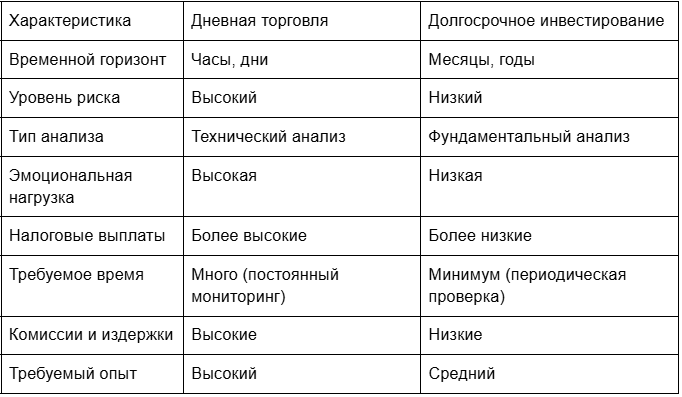
Риски и возможности
Риски дневной торговли
Дневная торговля связана с существенными рисками. Во-первых, высокая волатильность может привести к значительным убыткам в течение одного дня. Во-вторых, психологический фактор играет огромную роль — импульсивные решения после неудачной сделки часто приводят к еще большим потерям. В-третьих, статистика показывает, что только около 10% дневных трейдеров зарабатывают деньги, остальные теряют капитал.
Возможности дневной торговли
Несмотря на высокие риски, дневная торговля предлагает возможность быстрого заработка. Успешные трейдеры могут зарабатывать 20-30% годовых за несколько дней. Кроме того, дневная торговля позволяет использовать краткосрочные рыночные возможности и адаптироваться к изменяющимся условиям рынка.
Риски долгосрочного инвестирования
Основной риск долгосрочного инвестирования — это рыночные спады и медведьи рынки. Если вы инвестировали перед крахом, вам может потребоваться много времени, чтобы вернуть свои деньги. Кроме того, существует риск выбрать неправильные активы, которые не будут расти в долгосрочной перспективе.
Возможности долгосрочного инвестирования
Долгосрочное инвестирование предлагает стабильный и предсказуемый рост капитала. Исторически, фондовый рынок растет в среднем на 8-10% в год. Долгосрочные инвесторы могут воспользоваться силой сложного процента и получить значительное увеличение своего капитала за несколько десятилетий. Кроме того, долгосрочное инвестирование позволяет получать дивиденды и процентные платежи.
Что выбрать?
Выбор между дневной торговлей и долгосрочным инвестированием зависит от ваших целей, опыта, доступного времени и психологической устойчивости.
Дневная торговля подходит для:
• Людей с достаточным временем и опытом в торговле.
• Людей, готовых рисковать и быстро принимать решения.
• Людей, которые хотят быстрого результата и активного участия на рынке.
• Людей с хорошей психологической устойчивостью к стрессу.
Долгосрочное инвестирование подходит для:
• Людей с ограниченным временем для мониторинга рынка.
• Людей, которые хотят спокойствия и стабильного дохода.
• Людей, которые верят в долгосрочный рост рынка.
• Людей, которые хотят избежать стресса и эмоциональных решений.
• Начинающих инвесторов, которые только учатся управлять своим капиталом.
Гибридный подход
Некоторые инвесторы используют гибридный подход, который сочетает оба метода:
• Основу портфеля составляют долгосрочные инвестиции (70-80% капитала).
• Небольшую часть капитала (20-30%) используют для дневной торговли или краткосрочных спекуляций.
• Спекулятивное инвестирование проводят 2-3 раза в году при высокой волатильности.
Этот подход позволяет получить стабильность долгосрочных инвестиций и одновременно использовать возможности краткосрочных колебаний цен.
Рекомендации по выбору стратегии в 2025-2026 году
В текущих экономических условиях долгосрочное инвестирование остается более надежным подходом. Волатильность на рынках остается высокой, что создает риски для дневных трейдеров. Однако, если у вас есть опыт и достаточно времени, гибридный подход может быть оптимальным решением.
Независимо от выбранного стиля, помните о следующих принципах:
• Диверсификация портфеля: не кладите все яйца в одну корзину.
• Управление рисками: используйте стоп-лоссы и ограничивайте размер позиций.
• Обучение и анализ: постоянно совершенствуйте свои знания и навыки.
• Эмоциональный контроль: не позволяйте эмоциям управлять вашими решениями.
Заключение
Дневная торговля и долгосрочное инвестирование — это два разных подхода к управлению капиталом, каждый из которых имеет свои преимущества и недостатки. Дневная торговля может принести высокую доходность, но сопряжена с большими рисками и требует профессиональных навыков. Долгосрочное инвестирование остается более надежным и предсказуемым способом приумножения капитала, особенно для начинающих.
В 2025-2026 годах оба подхода имеют право на существование. Выбор зависит от вашего профиля, целей и готовности к риску. Если вы только начинаете свой инвестиционный путь, рекомендуется начать с долгосрочного инвестирования, а затем, набрав опыт, рассмотреть возможность добавления элементов дневной торговли в свой портфель.

Барои Зангҳо Ба Тоҷикистон
Дар бораи ширкат:
Сармоягузорӣ
Иттилоот




Маълумоти пешниҳодшуда танҳо хусусияти иттилоотӣ дорад ва набояд ҳамчун пешниҳоди харид ё фурӯши асъори хориҷӣ, коғазҳои қиматнок ва/ё дигар асбобҳои молиявӣ баррасӣ шавад. Маълумоти дар ин сайт овардашуда дастури инфиродии сармоягузорӣ нест. Асбобҳои молиявӣ ё амалиётҳое, ки дар ин бахш зикр шудаанд, шояд барои шумо мувофиқ набошанд, ба профили сармоягузории шумо, вазъи молиявӣ, таҷрибаи сармоягузорӣ, дониши шумо, ҳадафҳои сармоягузорӣ, муносибат ба хатари эҳтимолӣ ва даромаднокӣ мувофиқ набошанд.
ҶДММ "Брокери Биржавӣ" даромаднокии ояндаро кафолат намедиҳад ва ваъда намедиҳад, эътимоднокии сармоягузориҳои эҳтимолӣ ва устувории ҳаҷми даромади эҳтимолиро кафолат намедиҳад. Натиҷаҳои сармоягузорӣ дар гузашта даромади ояндаро кафолат намедиҳад.
ҶДММ "Брокери Биржавӣ" барои зарарҳои эҳтимолии сармоягузор дар ҳолати анҷом додани амалиёт ва сармоягузорӣ ба асбобҳои молиявӣ ҷавобгар нест ва инчунин кафолати бозгашт, самаранокӣ ва даромаднокии сармоягузориҳоро намедиҳад.
ҶДММ "Брокери Биржавӣ" иттилоъ медиҳад, ки фаъолияти худро дар бозори коғазҳои қимматнок мувофиқи иҷозатномаҳои зерин, ки аз ҷониби Вазорати молияи Ҷумҳурии Тоҷикистон дода шудаанд, анҷом медиҳад: иҷозатномаи фаъолияти депозитарӣ №010/25 аз 25.06.2025; иҷозатномаи фаъолияти брокерӣ №007/25 аз 25.06.2025; иҷозатномаи фаъолияти дилерӣ №008/25 аз 25.06.2025 ва иҷозатномаи фаъолияти идоракунии коғазҳои қиматнок №009/25 аз 25.06.2025, инчунин оид ба хатари ба вуҷуд омадани ихтилофи манфиатҳо, аз ҷумла дар натиҷаи муттаҳид кардани намудҳои гуногуни фаъолияти касбӣ дар бозори коғазҳои қиматнок ҳушдор медиҳад.